
Blackjack basic strategy deviations can sharpen decision-making, but only when the rules, table limits and game variant are understood. For Australian adults, the practical challenge is balancing a mathematically informed play with bankroll limits and local gambling law. Consider the game’s identity, core offer and distinguishing traits, then judge its everyday usability and overall fit. As Anna Conley, I approach strategy like a customer experience: the rule should be clear, the interface should reduce friction, and the channel decision should reflect how players actually behave.
A Useful Framework, Not an Automatic Advantage
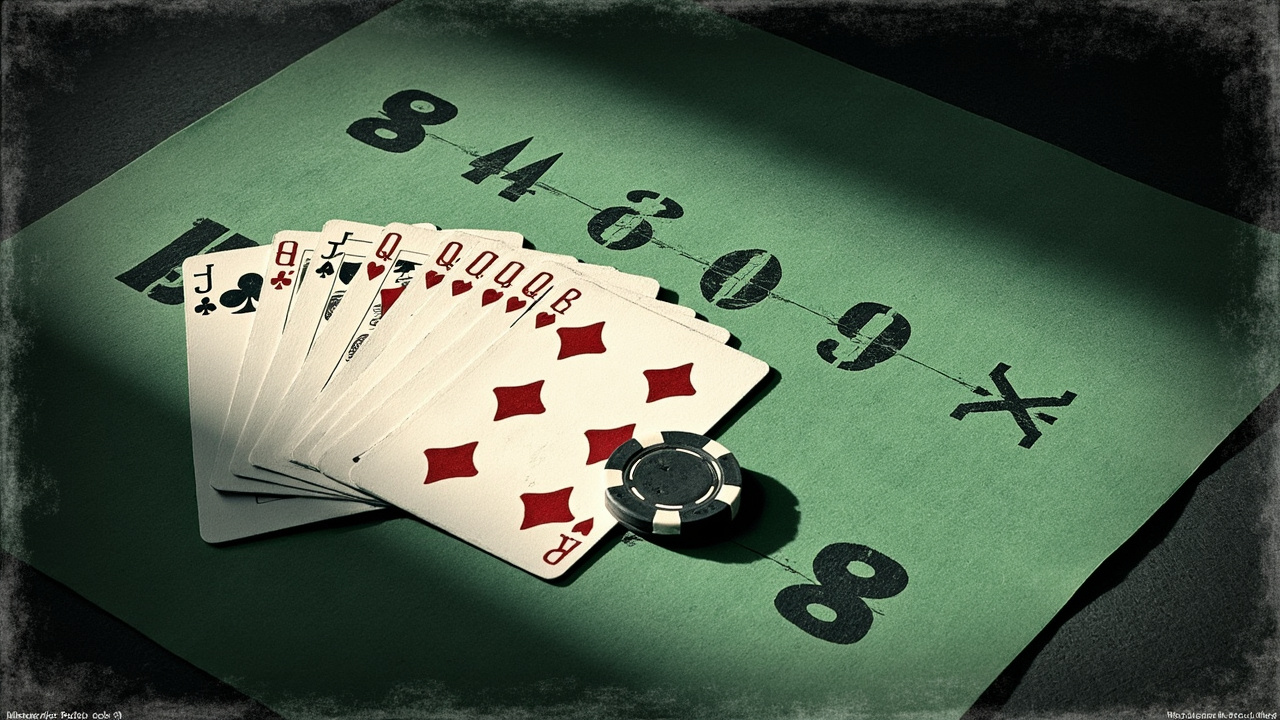
Blackjack basic strategy deviations are departures from standard basic strategy under defined conditions. They commonly depend on the player’s hand, the dealer’s upcard, the number of decks in play and sometimes the exact composition of cards still available. That last point matters because counting normally means tracking what has been dealt, not attempting any bypass of age, identity or location checks.
The core offer is therefore not a promise of better results, but a more precise decision framework. Its distinguishing traits are conditionality, discipline and the need for reliable information about the particular table. A deviation that works in a six-deck game with doubled surrender may be unsuitable in a single-deck game with different dealer-stand rules.
For everyday use, a compact table is often better than a large collection of memorised exceptions. Players should compare the current rule set with the chart’s assumptions before acting. This is similar to translating a brand promise into a usable customer journey: the claim must survive the operational detail. In Australia, that means checking local terms and using only appropriately licensed services; an offshore casino should never be described as locally licensed or regulated simply because an Australian-language page is available.
Internationally, the UK and Europe often use rule-specific strategy resources, while United States players encounter widely different surrender and soft-hand conventions. New Zealand has its own legal and regulatory framework. Those differences reinforce the point: a deviation is not universally “correct”, because blackjack rules do not travel intact across every market.
When a Deviation Earns Consideration
The strongest deviations are supported by both conditional maths and observable table behaviour. The following checklist helps separate a useful rule change from a hunch:
- Check the number of decks, dealer stand-on-soft-17 rule, surrender option and table limits.
- Compare the player hand with the dealer upcard before considering an exception.
- Track only enough information to validate the deviation; do not confuse a system with a guarantee.
- Test the decision with a clear bankroll limit and a fixed session time.
- Reassess after a rules or penetration change rather than carrying assumptions between tables.
A deviation is generally more credible when the table provides a clean game flow, transparent rules and fast enough information for the player to follow the chart. In a busy room, a readable mobile chart can be more useful than attempting rapid card tracking while also watching chips, bets and other players’ timing.
For Australian players in and around Wollongong, practical access should be judged carefully. A train break, arvo at the pub or a weekend casino visit may change how long someone has to learn, but it does not change the mathematics. A short session with clear limits is easier to manage than an ambitious session based on an exception rule.
The bonus can boost the fun, but reading the small print on a site like luckyelf casino no deposit bonus is just as important as checking the house edge. Chasing promos without understanding the underlying volatility will burn through any advantage they offer. Sounder practice still beats any marketing headline in the long run.
Evidence From the Table
Rules first, then judgement
A blackjack basic strategy deviation should never be separated from the rule environment that makes it relevant. In single-deck blackjack, the composition of remaining cards can influence decisions more strongly than in a multi-deck game. With multiple decks, the starting penetration and reshuffle behaviour also affect how much information players can realistically use. The same split, double or surrender decision may therefore have a different expected value across tables.
Players should start with the standard chart for the exact game, then isolate the exception being considered. If surrender is unavailable, a chart including surrender cannot be applied mechanically. If the dealer stands on all 17s, a chart built for dealer hits on soft 17 may misstate the decision. This is where good interface design becomes relevant: the game title should state its rule set clearly, and support should be able to explain which table version a chart describes.

International examples show why this is not an Australian-only concern. American casinos frequently publish tables for specific combinations such as double after split or surrender, whereas European games commonly use fewer decks and different insurance conventions. The UK market also includes substantial rule variation. A player comparing markets is not choosing between identical products; they are choosing different operating contexts.
Information discipline and bankroll fit
The evidence for using deviations is strongest when the information requirement is proportionate to the player’s attention. A basic strategy chart supports repeatable decisions. A deviation chart can improve accuracy in selected conditions, but it can also create more opportunities for mistakes if it is incomplete or applied without the relevant rule. The practical benefit depends on readability, not novelty.
The game’s everyday usability should be judged alongside the strategy. A clean table layout, visible limits, fast bet controls and an accessible rule panel all reduce uncertainty. Mobile play must preserve that clarity rather than compressing critical information into tiny text. Support should answer rule questions directly, while any promotional mechanic should be assessed separately from the mathematical quality of the game. A no-deposit offer may help someone inspect the interface, but it is not evidence that a deviation has positive value; promotional terms, wagering conditions and verification requirements remain relevant.
This is a useful brand-strategy comparison. The strongest proposition is not “more winning opportunities”, which would overclaim. It is “clearer decisions under the rules you are actually playing”. That proposition can be tested across desktop and mobile, across new and returning players, and across different session sizes. It is also easier to communicate honestly than a claim based on hidden systems or guaranteed returns.
Matching Deviations to Player Needs
Different players need different levels of decision support. A recreational player may benefit from a small set of common deviations, especially when the table’s rules are displayed prominently. A more experienced player may want to track composition and penetration, but only if the game and table limits make that effort sensible. A cautious player may prefer fewer decisions, tighter limits and a clear stop point rather than a complex exception system.
The game should make the relationship visible: rules, chart, limits and outcomes should belong to one coherent experience. That means no misleading language about easy wins, and no suggestion that a bonus removes bankroll risk. If a player is comparing a promotional page with a standard information page, promotional claims should be read against the actual terms. For example, a luckyelf casino no deposit bonus is best evaluated as an offer with conditions, not as a strategy advantage.
Brand fit matters because a player is not only choosing a blackjack variant; they are choosing whether the product feels trustworthy in use. Anna Conley’s customer-experience lens would favour clear labelling, consistent mobile behaviour and support that explains limitations. The same discipline applies in Australia as in the UK or Europe, although licensing information must be checked in the relevant jurisdiction. Never imply that an offshore service is Australian-licensed or use an offer to justify ignoring local restrictions.
Blackjack basic strategy deviations are best treated as a focused analytical tool. They can be useful, but they are not self-executing, and they cannot remove house edge or personal risk.
Verdict
The strongest fit is for players who want precise, rule-aware decisions without confusing complexity with certainty. Deviations work best alongside basic strategy, transparent table rules, disciplined limits and realistic session goals. For Australian adults, legality, identity checks and local restrictions come before any chart or promotion. Judge the game by how clearly it supports decisions – not by how loudly it promises an advantage.